Lab News
November, 2025
Academic Upbringing in Siberia Inspires Computer Science Professor’s Career
Article text: Read full article
 Deep in the pine forest of Siberia lies a unique scientific community that was envisioned as the New Atlantis of science. At its peak, the town was home to more than 65,000 scientists who worked at 35 research institutes dedicated to molecular biology, chemistry, physics and cybernetics. Neighbors and friends would gather at the local cafes or courtyards, not only to exchange pleasantries, but also to discuss the latest discoveries and to debate new scientific trends.
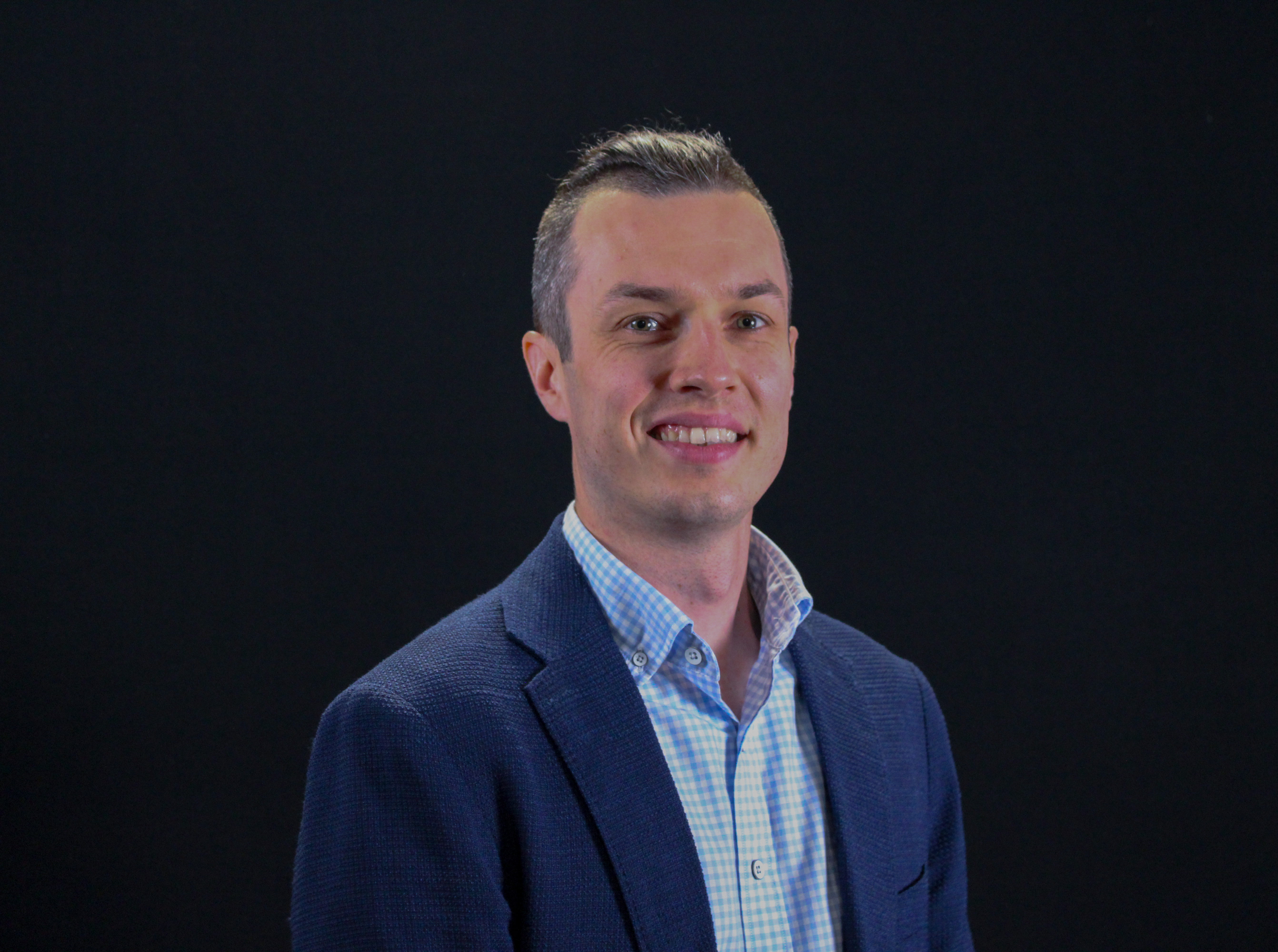
While this sounds like the setting for a sci-fi novel, it's actually the hometown of Assistant Professor Kirill Medvedev, a new faculty member in the Department of Computer Science. Medvedev grew up in Akademgorodok, which literally translates to "Academic Town," a place that sparked his interest in bioinformatics and inspired his career.
"The constant exposure to open, curiosity-driven inquiry made the language of science feel as natural as the Siberian forest around us," Medvedev says. "My passion for bioinformatics and computational biology was ignited by a fascination with three-dimensional protein structures. I realized that computational approaches are indispensable for decoding life's molecular machines, and it set me on the path toward research in the field of computational structural biology and bioinformatics."
Medvedev's work focuses on the classification and analysis of large-scale biomedical data sets that span the molecular, cellular and tissue levels. With that expertise, he is teaching a Discrete Mathematics course at UCF this fall. He says he hopes to instill both practical and technical knowledge in his students.
"I believe that integrity is the defining characteristic of a scientist," he says.
Medvedev's work focuses on the classification and analysis of large-scale biomedical data sets that span the molecular, cellular and tissue levels. Within the past decade, he developed the DrugDomain database, which lists the domain features of human proteins that are targets for small molecules and drugs. He augmented the DrugDomain database with artificial intelligence‑powered protein structure prediction, creating a first‑of‑its‑kind resource that maps thousands of post‑translational modifications to their drug targets across the human proteome. He also uses computational modeling to analyze variations within cancer types and employs deep learning methods to identify cancer subtypes.
The opportunity to collaborate with the next generation of scientists, as well as established colleagues, is what Medvedev says drew him to UCF.
"Today, truly groundbreaking science cannot be done by one person, or even one lab, but only through collaboration among multidisciplinary teams," Medvedev says.
Medvedev earned his doctoral degree in mathematical biology and bioinformatics from the Institute of Cytology and Genetics in 2015. Following that, he's worked with Professor Nick Grishin at the University of Texas Southwestern Medical Center as a postdoctoral researcher.